Trading Feels Easy Until Your Emotions Take Over
Imagine this.
You open your trading app and notice a stock has already surged 12% today. Every social media account is talking about it. Telegram groups are filled with screenshots of profits. You hesitate for a few minutes, then finally buy.
Within the next hour, the price starts falling.
You panic.
Instead of booking a small loss, you hold the position, hoping it will recover.
It doesn't.
A trade that began because of excitement ends with frustration and regret.
If this sounds familiar, you're not alone.
Thousands of traders experience the same cycle every day. The reason is FOMO, one of the biggest psychological challenges in trading.
Professional traders know that consistent profits don't come from chasing every opportunity. They come from following a disciplined trading plan, managing risk, and controlling emotions.
In this guide, you'll learn:
- What FOMO in trading really means
- Why it happens
- How it affects your trading performance
- Real-world examples
- Proven strategies to stop emotional trading
- How keeping a trading journal helps eliminate FOMO permanently
What Is FOMO in Trading?
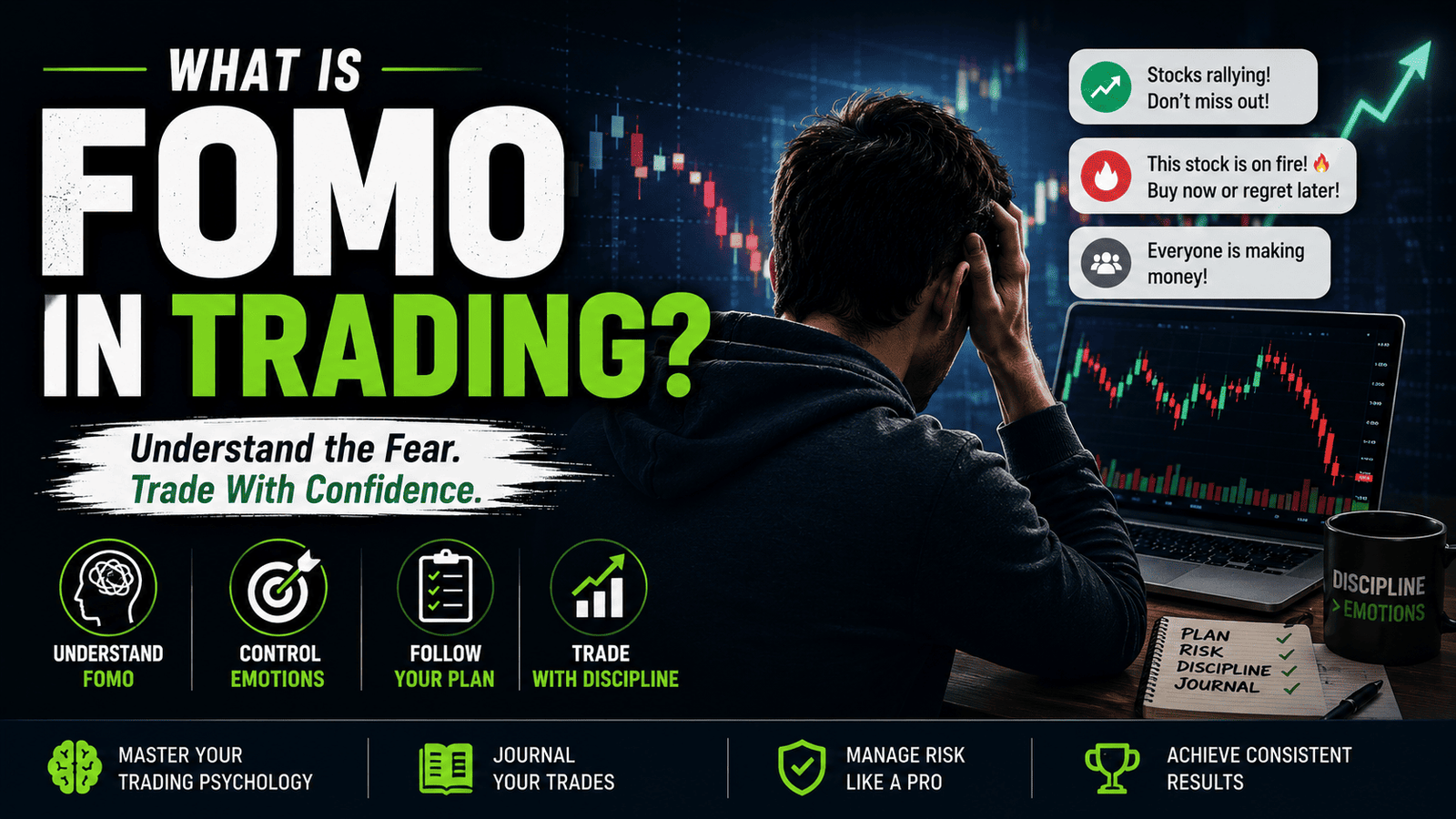
FOMO (Fear of Missing Out) in trading is the emotional fear that you're missing a profitable opportunity while others are making money.
Instead of following your trading strategy, you enter trades because you don't want to miss the market move.
This usually happens after:
- Seeing a stock already rallying
- Watching traders post profits on social media
- Following Telegram or WhatsApp trading groups
- Reading breaking news after prices have already moved
- Seeing friends make quick profits
In simple words:
FOMO trading means making decisions based on emotions instead of analysis.
Professional traders don't ask,
"How much money can I make?"
Instead, they ask,
"Does this trade fit my trading plan?"
That difference separates consistent traders from emotional traders.
Example of FOMO Trading
Imagine Reliance Industries breaks out after announcing strong quarterly results.
At 9:20 AM, the stock moves 2%.
You don't buy because you're unsure.
By 10:30 AM, it's already up 7%.
Twitter, YouTube, and Telegram channels are calling it the "trade of the day."
You finally enter.
Within 30 minutes, the stock starts correcting.
You buy near the day's high and get stopped out.
The market didn't beat you.
Your emotions did.
Why Does FOMO Happen?
FOMO is rooted in human psychology.
Our brains naturally dislike missing rewards.
In trading, this survival instinct works against us because markets constantly create opportunities.
Several psychological biases contribute to FOMO.
1. Fear of Missing Easy Money
When traders see others making profits, they believe:
"Everyone is earning except me."
This creates pressure to enter immediately without proper analysis.
2. Social Media Influence
Instagram.
YouTube.
Twitter (X).
Telegram.
Discord.
Trading influencers often post only winning trades.
Rarely do they show:
Losses
Mistakes
Risk management
Emotional struggles
This creates an illusion that everyone is making money except you.
3. Greed
Greed whispers:
"This stock will go another 20%."
Instead of waiting for a quality setup, traders chase momentum.
4. Lack of a Trading Plan
Without clear rules, every stock looks like an opportunity.
Professional traders have predefined:
Entry price
Exit price
Stop loss
Position size
Risk per trade
Beginners often trade based on feelings.
5. Watching Markets Continuously
Looking at charts every minute increases emotional reactions.
Every green candle feels like a missed opportunity.
Every breakout feels urgent.
This constant exposure makes FOMO worse.
How FOMO Affects Your Trading Performance
Many traders think FOMO only causes one bad trade.
In reality, it damages your entire trading process.
FOMO Behavior Result| Chasing breakouts | Buying at higher prices |
| Ignoring stop loss | Bigger losses |
| Overtrading | Higher brokerage and emotional fatigue |
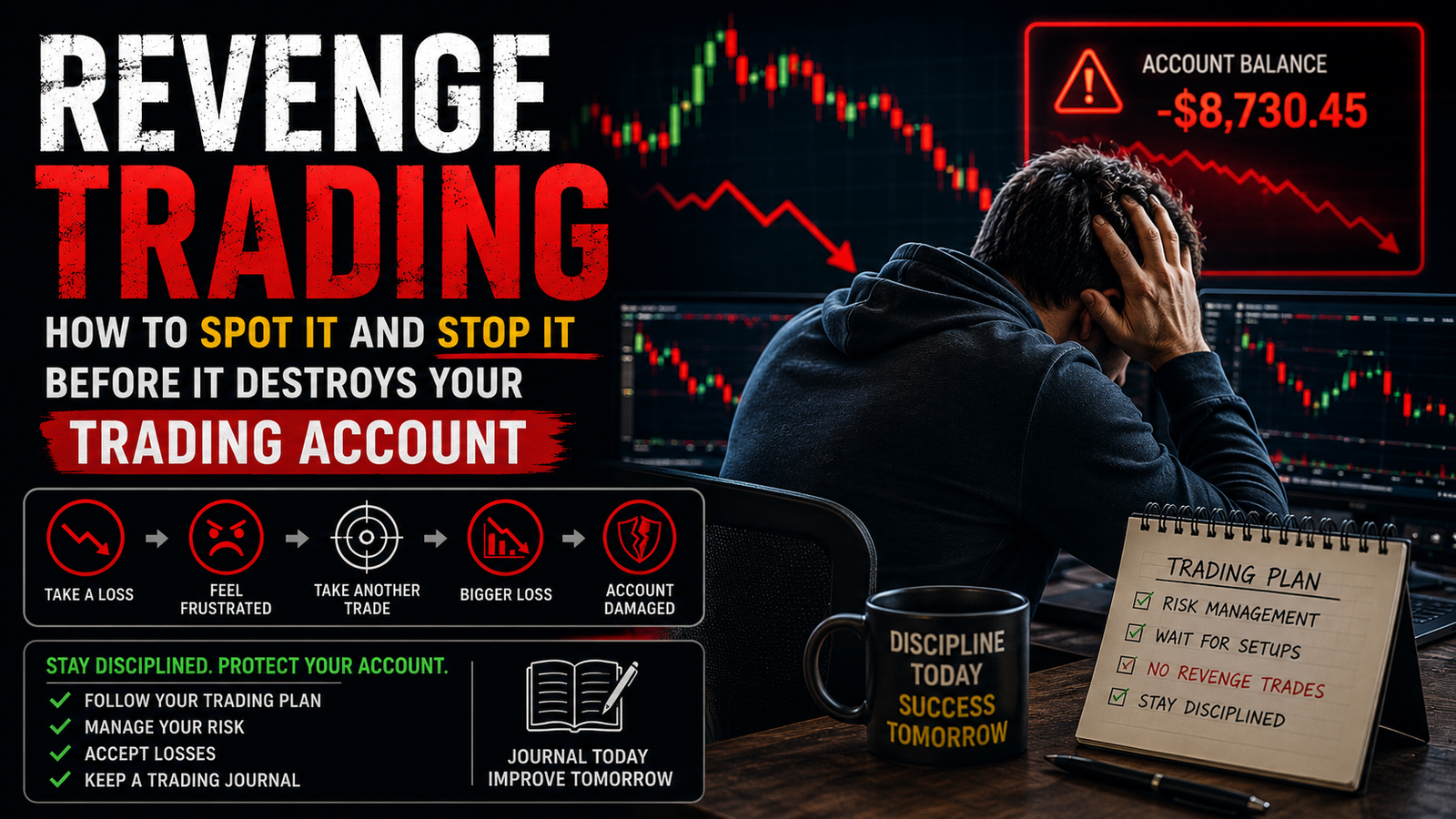
| Revenge trading | More losses |
| Increasing position size | Poor risk management |
| Trading random setups | Inconsistent results |
Over time, this creates a cycle:
FOMO → Loss → Frustration → Revenge Trading → Bigger Losses
Breaking this cycle requires discipline, not better indicators.
Signs You're Trading With FOMO
Ask yourself these questions.
If you answer "Yes" to several, FOMO may be affecting your decisions.
✔ You enter trades after a large price move.
✔ You buy because everyone else is buying.
✔ You change your trading plan mid-trade.
✔ You don't wait for confirmation.
✔ You increase your lot size after seeing others profit.
✔ You constantly refresh market prices.
✔ You feel anxious when not in a trade.
✔ You regret missing trades and immediately chase the next one.
✔ You ignore your stop loss.
✔ You trade because you're bored.
The more boxes you tick, the more emotional your trading is becoming.
FOMO Trading vs Disciplined Trading
FOMO Trading Disciplined Trading| Emotion-based | Rule-based |
| Chases price | Waits for setup |
| No patience | Patient execution |
| Overtrades | Trades selectively |
| Ignores risk | Follows risk management |
| Random entries | Planned entries |
| Stressful | Calm and consistent |
| Short-term excitement | Long-term profitability |
Professional traders understand one simple truth:
Missing one trade is far less expensive than taking a bad trade.
Real-Life Example of FOMO Trading
Let's compare two traders.
Trader A (Emotional)
Sees Bank Nifty rising sharply.
Buys after a 250-point rally.
No stop loss.
Uses maximum leverage.
Market reverses.
Loses 8% of trading capital in one trade.
Result:
Frustration.
Self-doubt.
Revenge trading.
More losses.
Trader B (Disciplined)
Notices the same breakout.
Checks trading plan.
Entry conditions aren't met.
Skips the trade.
Waits for another opportunity.
The next day, another setup appears.
He enters according to plan.
Small controlled risk.
Consistent execution.
Result:
Confidence increases regardless of whether the trade wins or loses because the process was correct.
Why Beginners Experience More FOMO
New traders often believe they must catch every market move.
This mindset comes from misunderstanding how markets work.
In reality:
Markets open almost every trading day.
New opportunities appear every week.
Missing one trade doesn't reduce your long-term profitability.
Capital preservation is more important than constant participation.
Beginners also tend to:
Focus on profits instead of process.
Compare themselves with experienced traders.
Follow too many trading channels.
Lack confidence in their strategy.
Ignore the importance of a written trading plan.
As experience grows, successful traders realize that patience is a competitive advantage. The market rewards consistency far more than excitement.
The Psychology Behind Emotional Trading
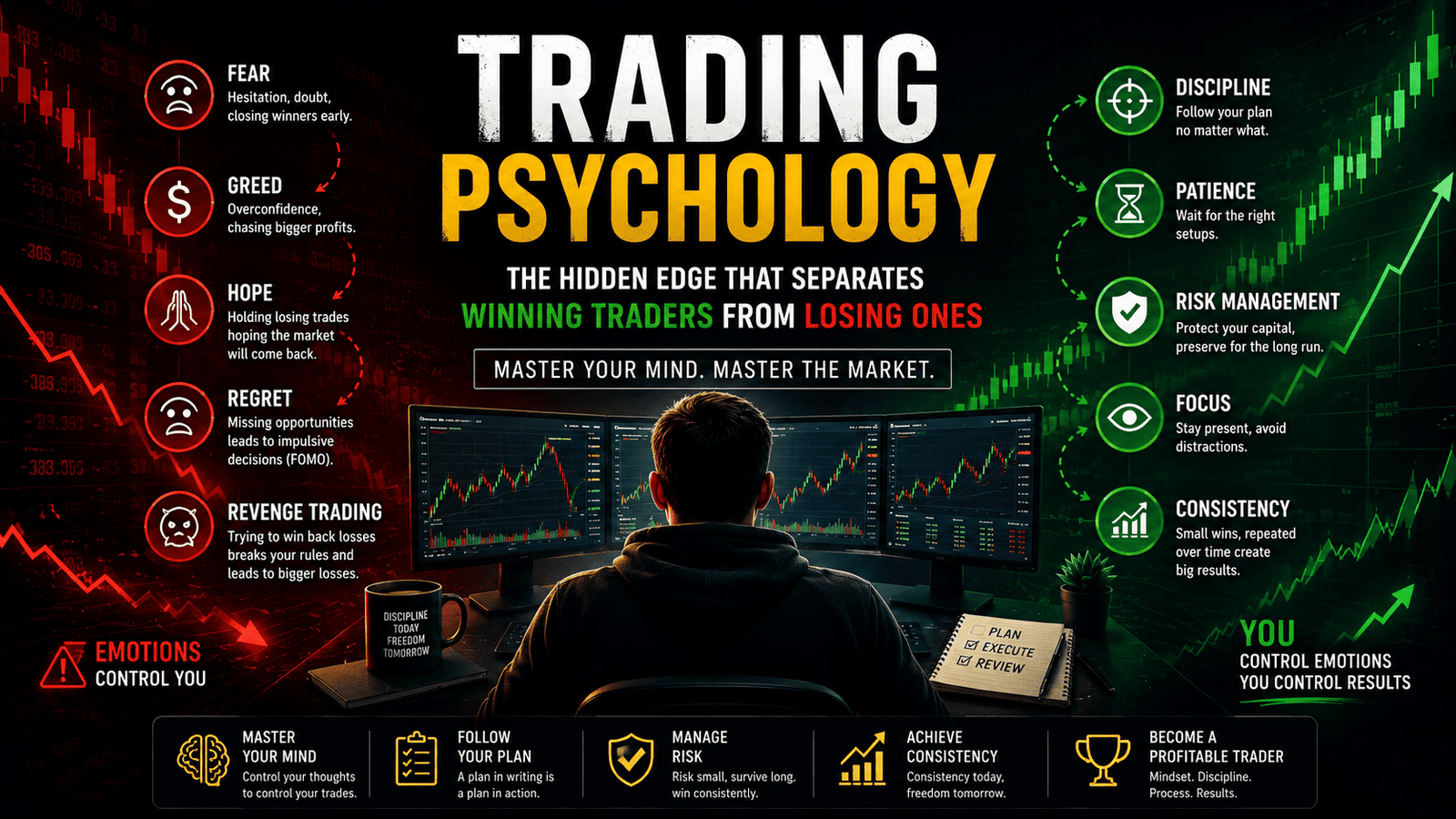
FOMO is only one part of trading psychology. It often works together with other emotions that influence decision-making:
Emotion Typical BehaviorOutcome| Fear | Exiting winning trades too early | Small gains, missed trends |
| Greed | Holding trades for unrealistic targets | Profits turn into losses |
| Hope | Refusing to exit losing positions | Larger drawdowns |
| Revenge | Entering trades immediately after a loss | More emotional mistakes |
| FOMO | Chasing fast-moving markets | Poor entries and inconsistent results |
Understanding these emotions is the first step. Learning to recognize them in real time is what separates improving traders from consistently profitable ones.
How to Stop FOMO in Trading (10 Proven Strategies)
Eliminating FOMO doesn't happen overnight. Even experienced traders occasionally feel the urge to chase a fast-moving market. The difference is that professionals rely on systems, not emotions.
Here are ten practical ways to reduce FOMO and improve your trading discipline.
1. Follow a Written Trading Plan
A trading plan acts as your decision-making guide. Before entering any trade, define:
Entry criteria
Exit target
Stop-loss level
Risk per trade
Position size
Maximum daily loss
If a trade doesn't meet your rules, don't take it.
Expert Tip: Keep your trading plan visible while trading. A simple checklist can prevent impulsive decisions.
2. Accept That You Can't Catch Every Trade
Many traders believe they need to participate in every market move.
The truth is:
The stock market creates new opportunities every day.
Missing one setup won't affect your long-term success.
Chasing missed trades often leads to unnecessary losses.
Professional traders think in probabilities, not individual trades.
Remember: There will always be another opportunity.
3. Wait for Confirmation
Instead of buying because the price is moving quickly, wait for your strategy's confirmation signals.
For example:
Breakout with strong volume
Candle close above resistance
Moving average confirmation
RSI or MACD confirmation (if part of your strategy)
Waiting for confirmation may mean entering slightly later, but it often improves the quality of your trades.
4. Limit Social Media During Market Hours
Constant exposure to profit screenshots and "multibagger" claims can create unnecessary pressure.
Consider these habits:
Avoid Telegram tip groups during trading hours.
Mute trading notifications.
Check social media only after the market closes.
Focus on your own trading plan.
Your performance should be measured against your strategy—not someone else's screenshots.
5. Use Proper Risk Management
Risk management reduces emotional pressure.
A common guideline is to risk only 1–2% of your trading capital per trade.
For example:
Trading Capital Maximum Risk (1%)| ₹50,000 | ₹500 |
| ₹1,00,000 | ₹1,000 |
| ₹5,00,000 | ₹5,000 |
When you know your downside is controlled, you're less likely to make emotional decisions.
6. Create a Pre-Trade Checklist
Before entering any trade, ask yourself:
Does this match my strategy?
Is the risk-to-reward ratio acceptable?
Have I defined my stop loss?
Am I trading because of analysis or emotion?
Would I still take this trade if nobody else were talking about it?
If any answer raises doubts, wait.
7. Review Every Trade
Improvement comes from reviewing both winning and losing trades.
After each trade, note:
Why you entered
Why you exited
Whether you followed your rules
Your emotional state
Lessons learned
Over time, you'll identify recurring emotional patterns.
8. Take Breaks After Big Wins or Losses
Strong emotions can affect your next decision.
After:
A large profit
A significant loss
Multiple consecutive trades
Step away from the screen for 15–30 minutes. A short break helps reset your mindset.
9. Focus on Process, Not Profit
Instead of asking:
"How much did I make today?"
Ask:
Did I follow my trading plan?
Did I respect my stop loss?
Did I avoid emotional entries?
Consistent execution eventually leads to better long-term results.
10. Maintain a Trading Journal
A trading journal is one of the most effective tools for overcoming FOMO.
It helps you:
Track emotional mistakes
Identify repeated patterns
Measure discipline
Review decision quality
Build confidence through data
The more aware you become of your behavior, the easier it is to improve it.
Why a Trading Journal Helps Eliminate FOMO
Most traders remember their profits but forget the reasons behind their losses.
A trading journal changes that.
Instead of relying on memory, you record every trade objectively.
What to Record
Category Example| Entry Reason | Breakout above resistance |
| Exit Reason | Target achieved |
| Strategy | Opening Range Breakout |
| Emotion | Excited, Fearful, Confident |
| Mistake | Entered before confirmation |
| Lesson | Wait for candle close |
After reviewing 50–100 trades, patterns become obvious.
For example:
Most losing trades happened after chasing momentum.
Winning trades followed your trading plan.
Emotional entries had a lower win rate.
This type of insight is difficult to gain without keeping detailed records.
Daily Habits of Disciplined Traders
Successful traders develop habits that reduce emotional decision-making.
Before the Market Opens
Review market news.
Mark key support and resistance levels.
Prepare a watchlist.
Define entry and exit rules.
During Market Hours
Follow your trading checklist.
Avoid social media distractions.
Stick to your predefined risk limits.
Accept missed opportunities.
After Market Close
Record every trade.
Review mistakes.
Analyze emotional decisions.
Plan improvements for the next session.
Discipline is built through consistent routines, not occasional motivation.
Common Mistakes Traders Make
Avoid these common habits that often lead to FOMO and inconsistent performance:
Buying after a stock has already made a large move.
Increasing position size after missing earlier entries.
Ignoring stop-loss rules.
Following unverified tips from social media.
Trading without a written strategy.
Overtrading after a profitable day.
Revenge trading after a loss.
Comparing your results with other traders.
Recognizing these mistakes is the first step toward eliminating them.
Frequently Asked Questions (FAQs)
1. What is FOMO in trading?
FOMO (Fear of Missing Out) is the emotional urge to enter a trade because you believe you're missing a profitable opportunity, often without following your trading plan.
2. Why do traders experience FOMO?
Common causes include social media influence, watching rapid price movements, comparing profits with others, and lacking a clear trading strategy.
3. Is FOMO common among beginners?
Yes. Beginners often feel pressure to participate in every market move because they haven't yet developed confidence in their trading process.
4. Can experienced traders also experience FOMO?
Yes, but experienced traders usually recognize the emotion and rely on predefined rules instead of acting impulsively.
5. How can I stop emotional trading?
Create a written trading plan, use proper risk management, maintain a trading journal, avoid unnecessary market noise, and review your trades regularly.
6. Does a trading journal help reduce FOMO?
Absolutely. Recording your trades and emotions helps identify patterns, making it easier to avoid repeating emotional mistakes.
7. What is the difference between FOMO and revenge trading?
FOMO happens when you chase opportunities because you fear missing profits. Revenge trading occurs after a loss, when you trade emotionally to recover money quickly.
8. Is missing a trade a bad thing?
No. Missing a trade is often better than entering a poor-quality setup. Professional traders prioritize quality over quantity.
9. How does risk management reduce FOMO?
Knowing your maximum risk per trade reduces anxiety and helps you make objective decisions instead of emotional ones.
10. Which tool can help improve trading discipline?
A structured trading journal, combined with regular trade reviews, is one of the most effective tools for improving discipline and long-term consistency.
Conclusion
FOMO is one of the biggest reasons traders struggle with consistency. It encourages chasing fast-moving markets, ignoring risk management, and making decisions based on emotion instead of analysis.
The good news is that FOMO can be managed.
By following a written trading plan, using disciplined risk management, reviewing every trade, and maintaining a detailed trading journal, you can gradually replace emotional reactions with data-driven decisions.
Remember, successful traders don't try to catch every opportunity. They focus on executing high-quality setups consistently over time.
Trading is a marathon, not a sprint. Protect your capital, trust your process, and let discipline—not emotion—guide your decisions.
Improve Your Trading Discipline with TradeVek
Every trader experiences emotional decisions at some point. The key is learning from them.
TradeVek helps you:
Record every trade in one place
Track your trading psychology
Analyze winning and losing patterns
Monitor performance with detailed analytics
Build long-term trading discipline through data
Instead of wondering why a trade failed, you'll have the insights to improve your next one.
Start journaling your trades today and make every trade a learning opportunity.
Related blogs
- 10 Best Trading Website Platforms in India (2026) – Brokers, Charts & Trading Journal
- Best Trading Journal App in India (2026): Excel, Templates & PDF Compared
- Excel Trading Journal vs Trading Journal Website: Which Is Better for Traders in 2026?
- Best Trading Journal for Beginners (2026): The Complete Guide to Becoming a Consistent Trader
- Trading for Beginners: The Complete Guide to Trading in India (2026)
- Trading Psychology: The Hidden Edge That Separates Winning Traders from Losing Ones