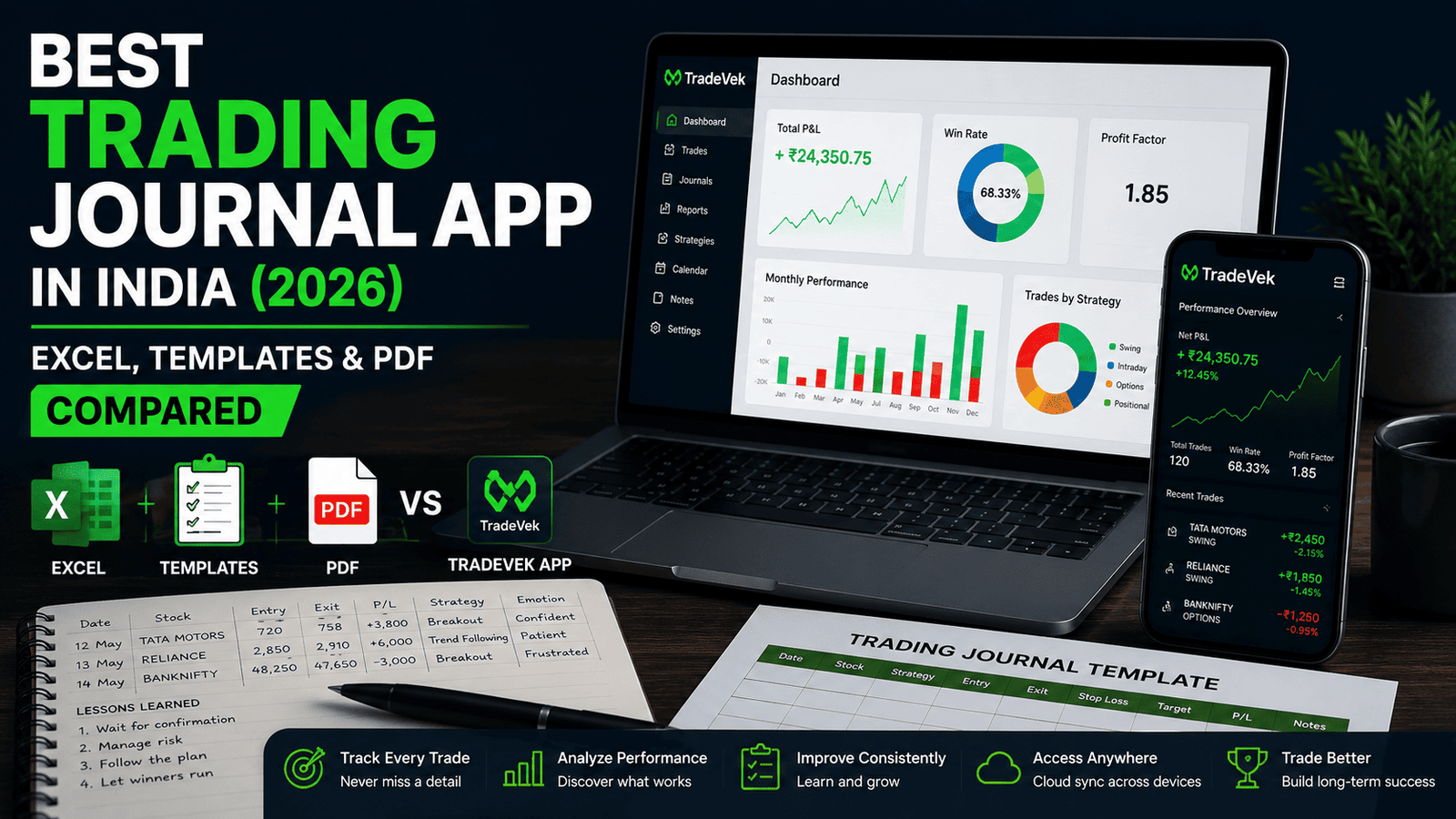
What Is an Excel Trading Journal?
An Excel Trading Journal is a spreadsheet that traders use to manually record and analyze every trade they take. Many beginners start with Excel because it is simple, flexible, and familiar.
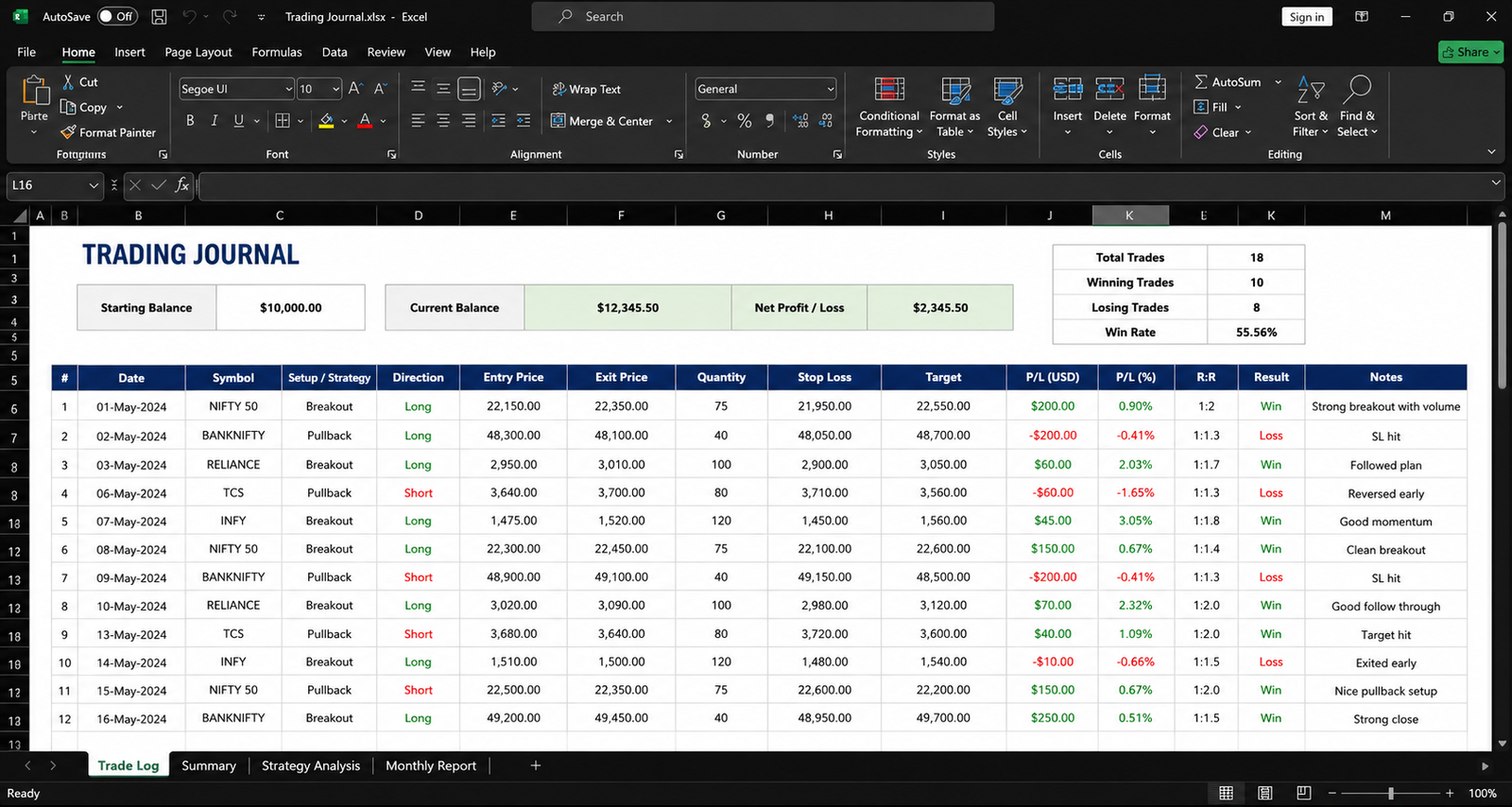
A typical Excel trading journal includes:
- Trade Date
- Stock or Currency Pair
- Buy Price
- Sell Price
- Quantity
- Stop Loss
- Target Price
- Profit & Loss (P&L)
- Risk-to-Reward Ratio
- Trade Notes
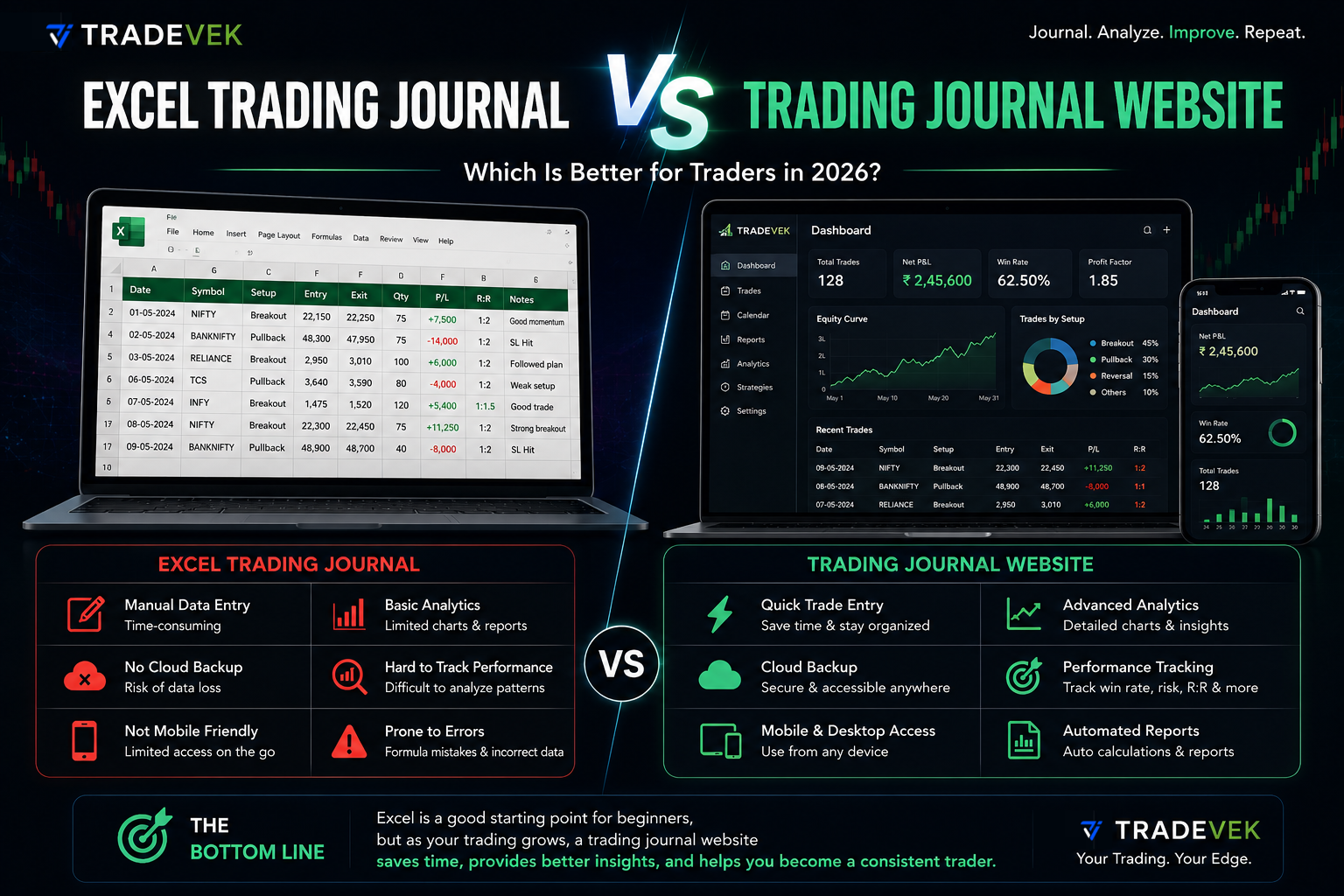
Excel is a practical way to learn trade tracking, but it requires manual updates and calculations, which can become difficult as the number of trades grows.
Why Do Traders Keep a Trading Journal?
A trading journal is more than just a record of trades. It helps traders evaluate their decisions, identify mistakes, and improve over time.
A well-maintained journal can help you:
- Understand why a trade succeeded or failed
- Track your trading performance
- Improve discipline
- Identify emotional trading patterns
- Build consistency
Successful traders review their journals regularly because improvement comes from learning, not guessing.
What Is a Trading Journal Website?
A Trading Journal Website is an online platform that automatically records, organizes, and analyzes your trades.
Instead of manually maintaining spreadsheets, traders can access dashboards, reports, and performance metrics from anywhere.
Most platforms allow you to:
- Record trades quickly
- Upload trade screenshots
- Analyze win rate
- Track profit and loss
- Monitor risk-to-reward ratios
- Review strategy performance
- Access data from multiple devices
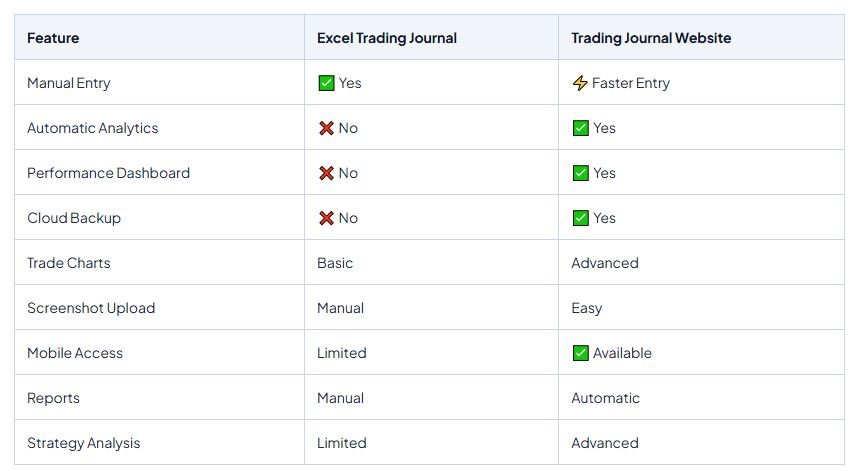
Excel Trading Journal vs Trading Journal Website
Advantages of an Excel Trading Journal
Excel remains a popular choice because it is flexible and easy to customize.
Low Cost
Many traders already have Microsoft Excel or can use Google Sheets for free.
Flexible
You can create your own layouts, formulas, and calculations based on your trading style.
Good Learning Tool
Excel helps beginners understand important trading metrics such as:
- Position Size
- Profit & Loss
- Risk Percentage
- Risk-to-Reward Ratio
Offline Access
You can access and edit your spreadsheet without an internet connection.
Limitations of an Excel Trading Journal
As your trading activity grows, spreadsheets become more difficult to manage.
- Manual calculations
- Time-consuming updates
- Formula errors
- No automated reports
- Limited visual analytics
- Difficult to analyze large trade histories
Benefits of a Trading Journal Website
Online trading journals are designed to help traders improve through data-driven insights.
Automatic Performance Reports
Instantly view your win rate, average profit, average loss, expectancy, and trading statistics.
Interactive Charts
Visual reports make it easier to identify strengths, weaknesses, and profitable trading patterns.
Better Risk Management
Monitor your risk per trade and ensure your position sizing follows your trading plan.
Cloud Storage
Your trading history is securely stored and accessible from desktop, tablet, or mobile devices.
Faster Trade Reviews
Filter trades by strategy, date, or market to analyze your performance more efficiently.
Which Option Should You Choose?
Choose Excel If:
- You're a beginner.
- You trade occasionally.
- You enjoy working with spreadsheets.
- You want a free solution.
Choose a Trading Journal Website If:
- You trade regularly.
- You want automatic analytics.
- You review your trades frequently.
- You want advanced performance reports.
- You prefer cloud access and easier organization.
How TradeVek Simplifies Trade Journaling
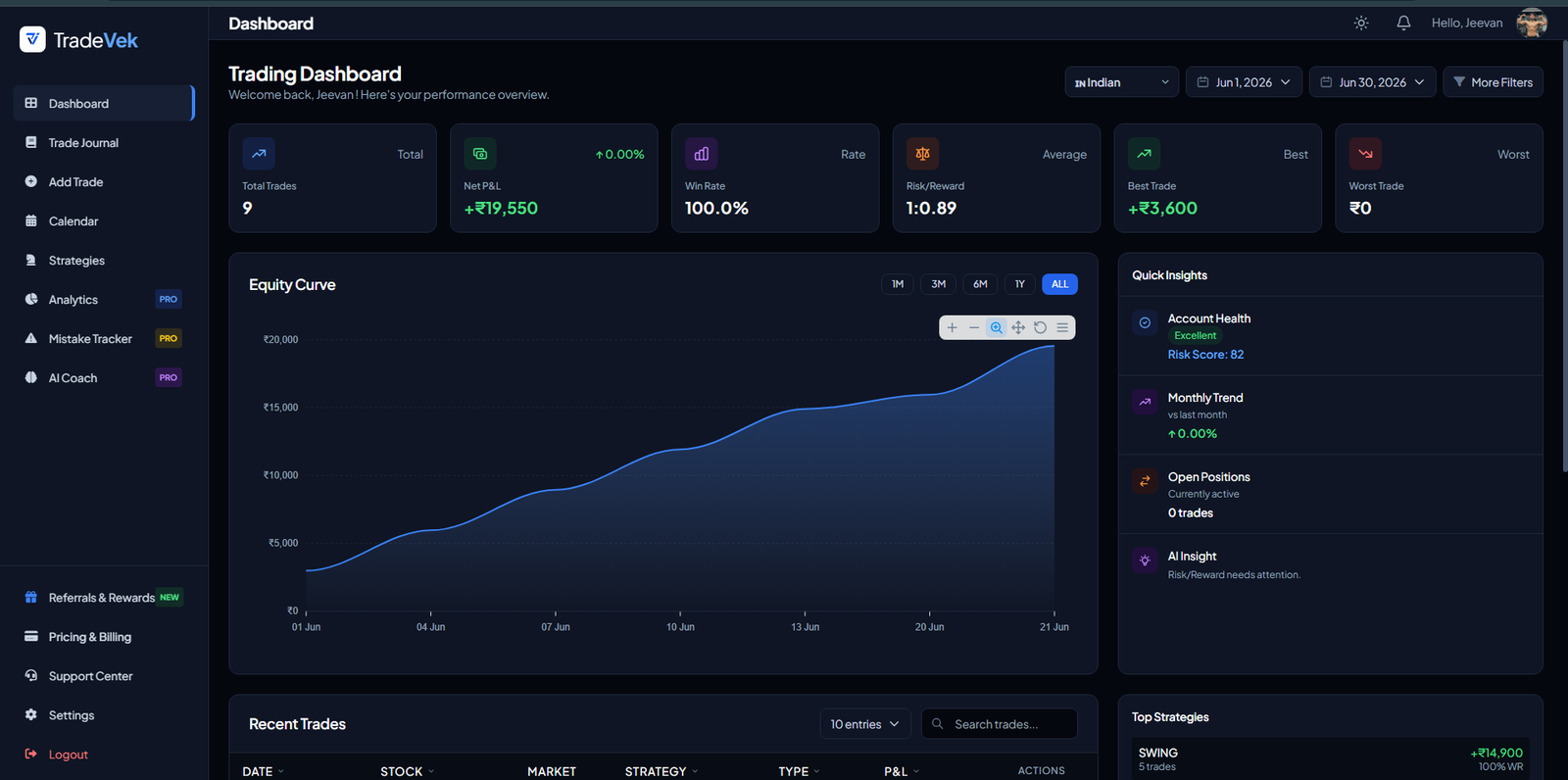
TradeVek helps traders organize their entire trading journey in one place.
- Record every trade
- Monitor profit and loss
- Analyze win rate
- Track risk-to-reward ratios
- Upload trade screenshots
- Review strategy performance
- Access visual analytics dashboards
- Identify recurring mistakes
Instead of spending time updating spreadsheets, you can focus on reviewing your trading performance and improving your decision-making.
Best Practices for Maintaining a Trading Journal
- Record every trade immediately after execution.
- Be honest about your mistakes.
- Include trade screenshots whenever possible.
- Review your journal weekly.
- Focus on improving your process instead of chasing profits.
Frequently Asked Questions
Is Excel good for beginners?
Yes. Excel is a practical starting point for traders who want to learn how to record and analyze trades manually.
Is a trading journal website better?
A dedicated trading journal website offers automation, cloud storage, and advanced analytics that are difficult to achieve with spreadsheets alone.
Can I move from Excel to an online trading journal?
Yes. Many traders begin with Excel and later switch to an online platform as their trading experience and trade history grow.
Why should I review my trading journal?
Regular reviews help identify recurring mistakes, measure consistency, and improve decision-making over time.
Final Thoughts
Both Excel Trading Journals and Trading Journal Websites can help traders build the habit of recording every trade.
Excel is a great starting point because it is flexible and easy to customize. However, as your trading becomes more active, manually maintaining spreadsheets can take valuable time away from analyzing your performance.
A dedicated trading journal website provides automation, visual analytics, and easier trade reviews, helping traders focus on continuous improvement rather than data management.
The most important step is not choosing the perfect tool—it's consistently recording, reviewing, and learning from every trade. Over time, that habit can lead to better discipline and more informed trading decisions.