What Is Revenge Trading?
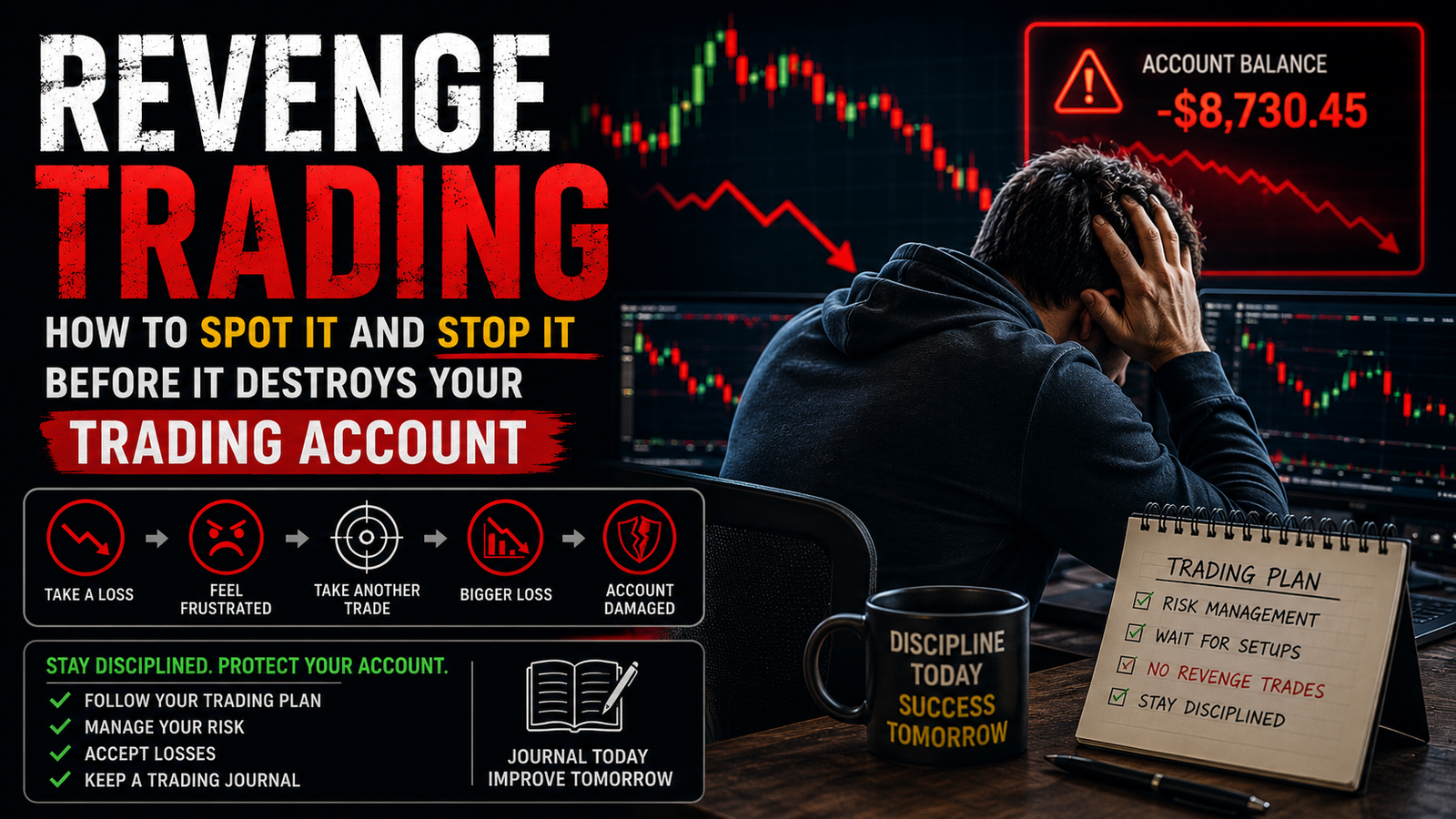
Revenge trading is entering a new trade after a loss with the primary goal of recovering money instead of following your trading plan.
Although the trade may appear technically valid, the decision is driven by frustration, anger, or fear rather than objective market analysis.
The problem isn't losing a trade. The problem is abandoning your discipline because of that loss.
Why Do Traders Revenge Trade?
Human psychology is wired to avoid losses. Losing money often feels more painful than making the same amount feels rewarding. This is known as loss aversion.
After taking a loss, many traders feel an urgent need to recover their money. Instead of accepting the outcome and waiting for the next quality setup, they enter another trade driven by emotions.
Common situations that trigger revenge trading include:
- Multiple consecutive losing trades
- Trading with money you cannot afford to lose
- Pressure from social media or trading communities
- Missing a profitable move
- Closing a winning trade too early
- Overconfidence after previous wins
- Trading out of boredom
When emotions take control, trading rules are usually the first thing to disappear.
Warning Signs of Revenge Trading
1. You Ignore Your Setup
You enter a trade simply because you want your money back—not because your strategy generated a signal.
2. You Increase Position Size
Trying to recover losses faster by risking more money is one of the clearest signs of emotional trading. Risk should never increase simply because emotions increased.
3. You Skip Your Trading Checklist
You stop checking support and resistance, ignore confirmation signals, forget risk-to-reward calculations, and place trades impulsively.
4. You Trade Immediately After a Loss
Healthy trading requires patience. Revenge trading often happens within minutes of closing a losing position.
5. You Feel Urgent Instead of Patient
The market creates opportunities every day. If you feel you must trade immediately, that urgency is likely coming from your emotions—not from the market.
How to Stop Revenge Trading
Create a Mandatory Cooldown Period
After every losing trade, stop trading for 15 to 30 minutes. Walk away from your screen, drink water, or take a short walk before making another decision.
This simple habit interrupts emotional decision-making.
Set a Daily Loss Limit
Before the market opens, decide the maximum amount you're willing to lose for the day.
Once that limit is reached, stop trading. No exceptions.
Accept That Losses Are Part of Trading
Every successful trader experiences losses. Losses are business expenses—not personal failures.
The objective isn't to avoid every losing trade. The objective is to avoid emotional decisions that create unnecessary losses.
Keep a Trading Journal
A trading journal helps you identify patterns that are impossible to see from memory alone.
Record the following after every trade:
- Entry Price
- Exit Price
- Position Size
- Trading Strategy
- Trade Screenshot
- Reason for Entry
- Reason for Exit
- Emotional State
After reviewing several weeks of trades, you'll often discover that your largest losses occur shortly after another losing trade.
Track Your Emotional State
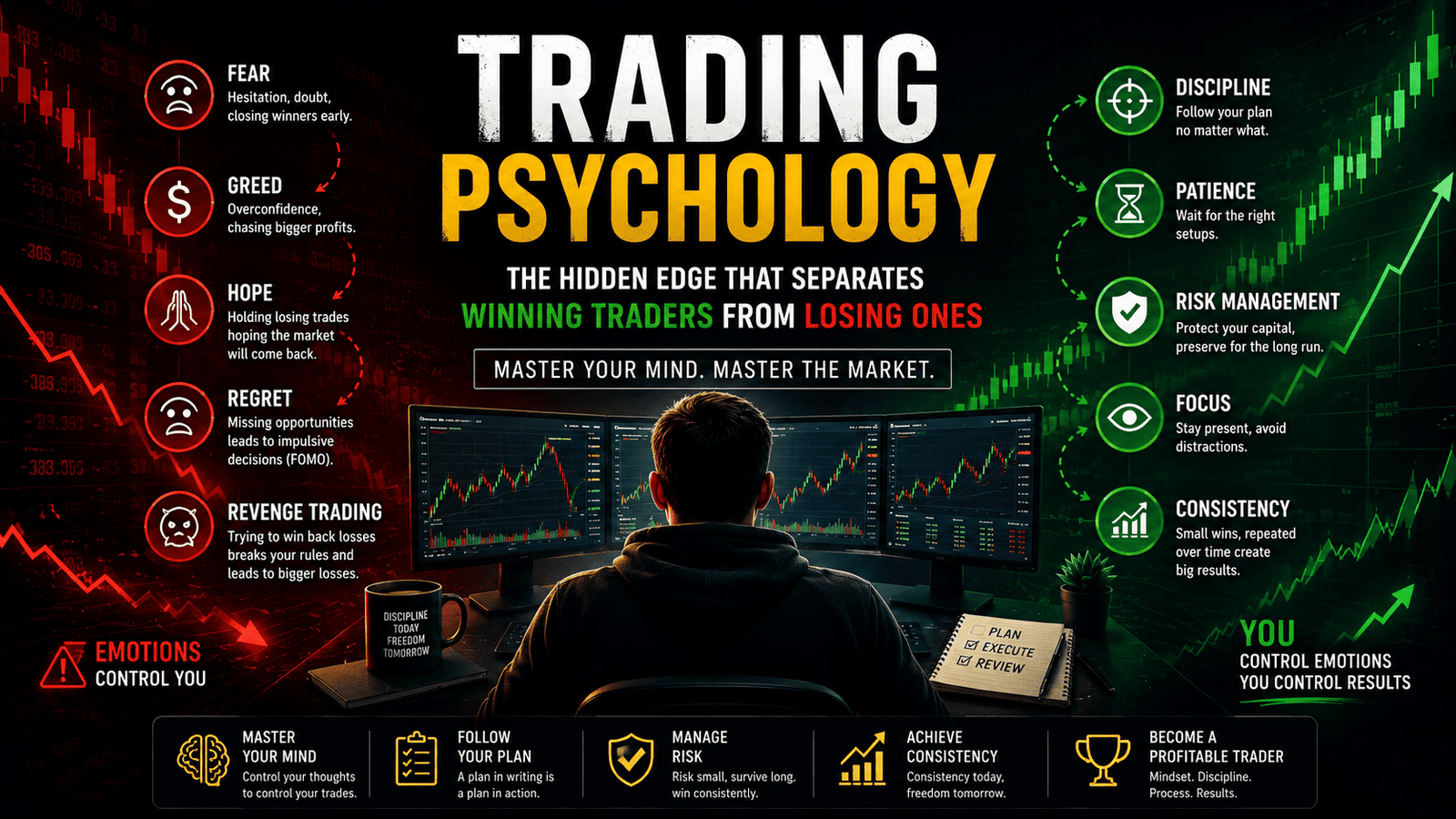
Don't only record market data. Record how you felt before and during the trade.
- Frustrated
- Angry
- Confident
- Fearful
- Greedy
- Bored
- Overconfident
Your emotions often predict your results better than market conditions.
The Hidden Cost of Revenge Trading
Financial losses are only part of the damage.
Revenge trading also:
- Reduces confidence
- Breaks discipline
- Creates inconsistent performance
- Increases stress
- Encourages even larger future mistakes
One emotional decision can create a chain reaction that affects the rest of your trading session.
Build Discipline, Not Just Strategy
Many traders spend countless hours searching for better indicators, strategies, and entry signals.
However, psychology often determines whether a strategy succeeds.
Discipline is a skill that improves through repetition, review, and accountability.
The traders who succeed over the long term aren't the ones who never lose—they're the ones who never let one loss become five.
Final Thoughts
Revenge trading rarely feels like revenge trading.
It feels like confidence. It feels like certainty. It feels like "one more trade."
That's exactly what makes it dangerous.
The best traders don't eliminate emotions—they build systems that prevent emotions from controlling their decisions.
Track your trades. Review your mistakes. Protect your capital.
Consistency isn't built by winning every trade. It's built by avoiding the emotional mistakes that destroy trading accounts.
Improve Your Trading Discipline with TradeVek
A trading journal is valuable only if you consistently use it.
TradeVek helps traders identify revenge trading by tracking rule violations, monitoring discipline scores, analyzing emotional patterns, and highlighting trades placed too soon after a loss.
Instead of relying on memory, use data to understand your behavior, improve your decision-making, and build long-term trading discipline.
The best traders don't just study charts—they study themselves.