Trading Psychology: The Hidden Edge That Separates Winning Traders from Losing Ones
How mastering your mind can matter more than mastering the market.
Every trader has heard the saying: "Trading is 80% psychology, 20% strategy." Yet most beginners spend nearly all of their time studying charts, indicators, and strategies while overlooking the one factor that influences every trade—their own mindset.
If you've ever exited a winning trade too early because of fear, held a losing trade too long because of hope, or revenge traded after a loss, you've already experienced how powerful trading psychology can be.
Trading psychology isn't a soft skill—it's a core trading skill. This guide explains the emotional side of trading, the most common psychological traps, and practical techniques to help you become a more disciplined and consistent trader.
Why Trading Psychology Matters More Than Strategy
A profitable strategy in the hands of an undisciplined trader can still lose money. Fear, greed, impatience, and overconfidence often cause traders to ignore their own rules during the moments that matter most.
Understanding trading psychology helps you:
- Stick to your trading plan under pressure.
- Avoid emotional decisions after wins and losses.
- Manage risk consistently instead of emotionally.
- Build long-term confidence and discipline.
The Core Emotions That Drive (and Wreck) Traders
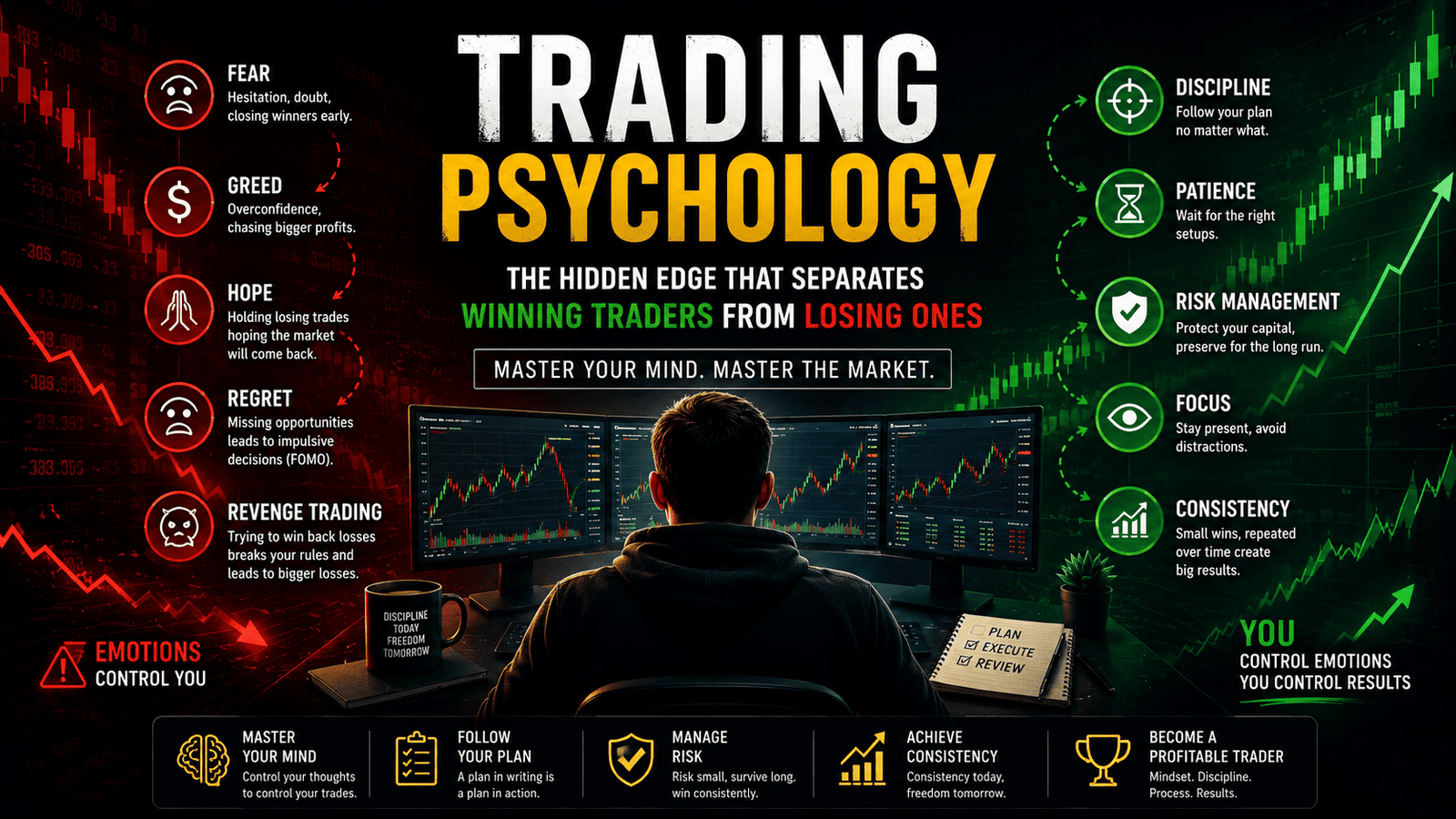
1. Fear
Fear appears as hesitation to enter a valid setup, closing profitable trades too early, or moving stop-loss orders too close. Human beings naturally dislike losing money more than they enjoy making it, making fear one of the strongest emotions in trading.
2. Greed
Greed encourages traders to increase position sizes, ignore stop losses, and chase trades outside their trading plan. It often develops after a winning streak when confidence turns into overconfidence.
3. Hope
Hope causes traders to hold losing positions longer than planned, believing the market will eventually reverse.
4. Regret
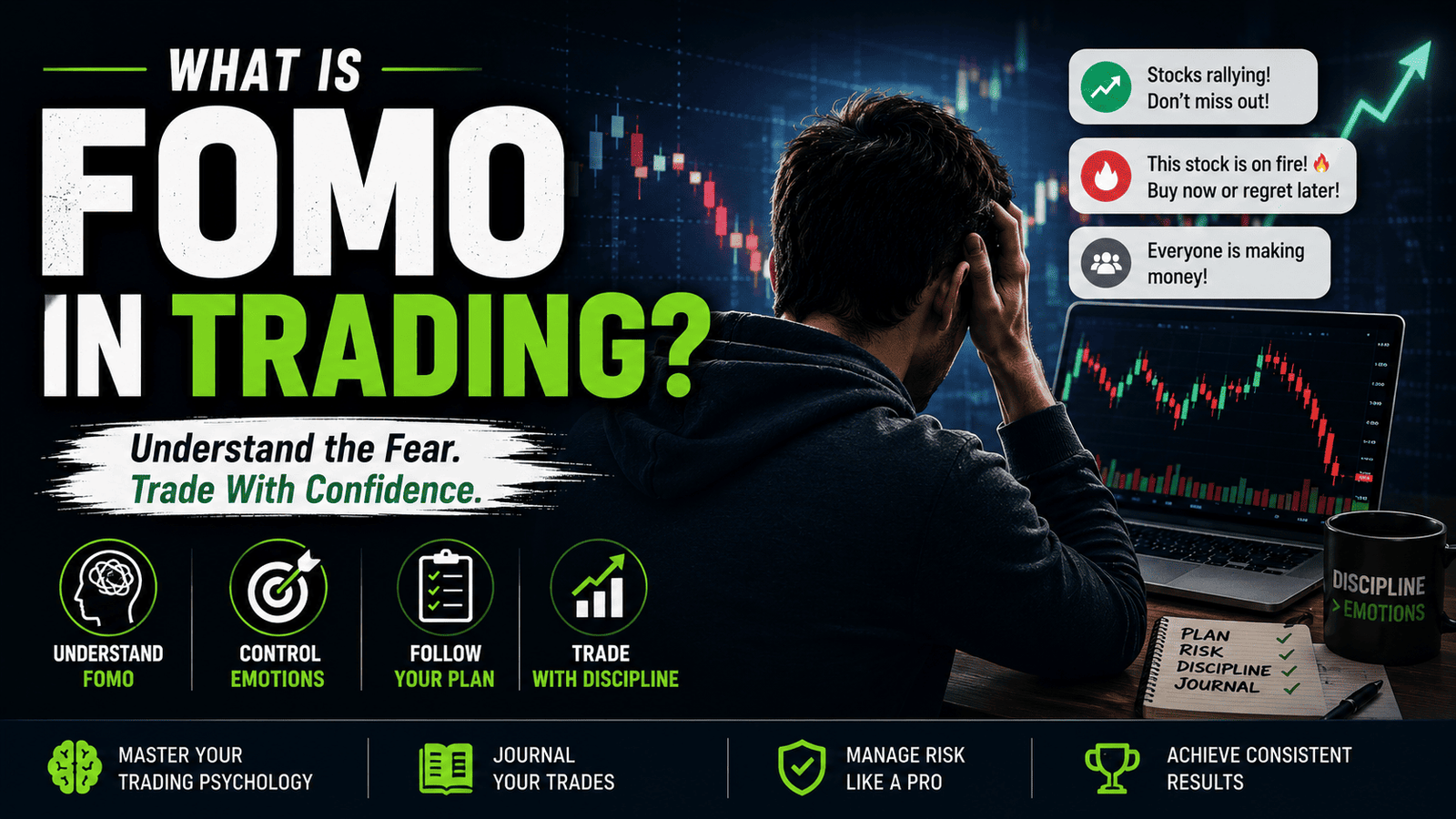
Missing a profitable move often creates regret, leading to impulsive entries driven by FOMO (Fear of Missing Out).
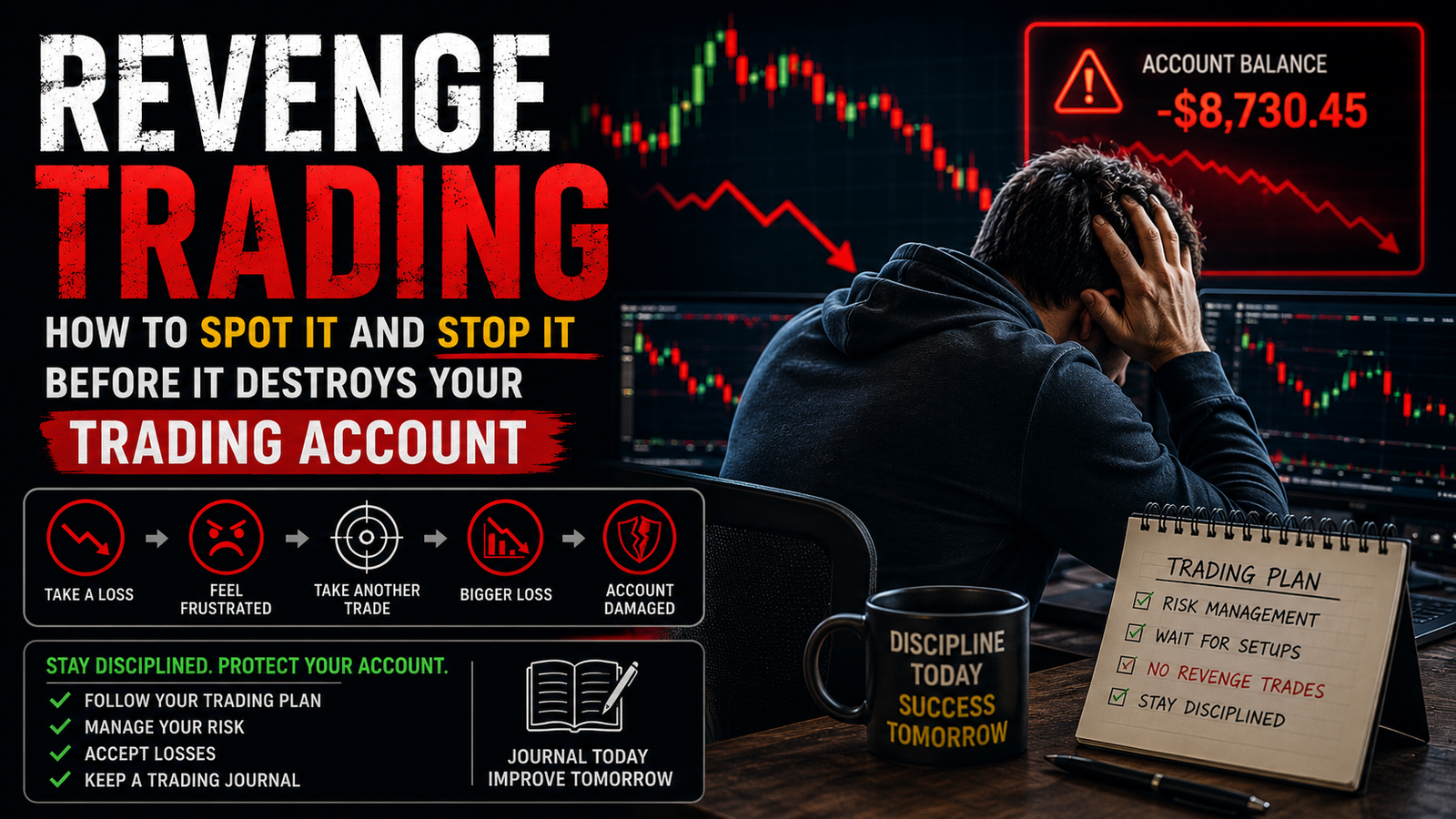
5. Revenge Trading
After taking a loss, some traders immediately enter another position to recover their money. This emotional response frequently leads to even larger losses.
Common Psychological Biases in Trading
| Psychological Bias | How It Affects Trading |
|---|---|
| Confirmation Bias | Only looking for information that supports a trade you already want to take. |
| Overconfidence Bias | Increasing position size after several winning trades while assuming skill over probability. |
| Loss Aversion | Holding losing trades too long to avoid accepting a loss. |
| Recency Bias | Judging your trading strategy based only on recent results. |
| Anchoring | Focusing on your entry price instead of current market conditions. |
Building Mental Discipline: Practical Techniques
- Create a written trading plan: Define your entry, exit, position size, and maximum risk before entering any trade.
- Use a trading journal: Record every trade along with your emotions. Reviewing your journal helps identify recurring mistakes.
- Define your risk before entering: Risk only a small percentage of your trading capital on each trade.
- Set daily and weekly loss limits: Predetermined limits help prevent revenge trading.
- Develop a pre-market routine: Spend a few minutes reviewing your watchlist and market conditions before trading begins.
- Review instead of reacting: Analyze each trade objectively instead of dwelling on emotional outcomes.
- Think in probabilities: Evaluate your performance over dozens of trades rather than focusing on individual wins or losses.
Frequently Asked Questions
What is trading psychology?
Trading psychology refers to the emotions, mindset, and behavioral patterns that influence trading decisions. Managing these emotions helps traders become more disciplined and consistent.
Why is trading psychology important?
Even the best trading strategy can fail if fear, greed, or impulsive decisions override your trading plan.
Can a trading journal improve trading psychology?
Yes. A trading journal helps identify emotional mistakes, improve discipline, and build better trading habits through regular review.
What is the biggest psychological mistake traders make?
Revenge trading is one of the most damaging emotional mistakes because it often leads to larger losses and poor risk management.
Final Thoughts
Markets don't move because of indicators alone—they move because of collective human behavior. Your trading results are shaped not only by your strategy but also by your ability to manage fear, greed, uncertainty, and impulsive decisions.
The traders who succeed over the long term aren't necessarily those with the most complex strategies. They're the ones who consistently follow their trading plans, manage risk, and learn from every trade.
Master your mindset, and you'll be far better equipped to master the markets.